

Guide and Report
Children’s Access to Cultural Rights in Adıyaman After the Earthquake
Project Period: 2024–2025
Project Partner: İKSV Ortaklaşa: Culture, Dialogue and Support Programme
Following the earthquakes of 6 February 2023, children’s living environments, everyday relationships, and opportunities for play and social interaction in Adıyaman changed dramatically. While urgent needs such as housing, infrastructure, education and access to essential services remained, children’s participation in cultural life emerged as an area of rights that was often overlooked, yet crucial to recovery, a sense of belonging and social solidarity.
As Şehir Dedektifi Urban, Environment and Art Association, we developed the Perre Children and City Biennial in collaboration with Adıyaman Municipality as part of Ortaklaşa: Culture, Dialogue and Support Programme, implemented by the Istanbul Foundation for Culture and Arts (İKSV) with the support of the European Union. The Biennial was designed as a participatory cultural project that enabled children to express their experiences of the city, cultural heritage and everyday spaces through art and design.
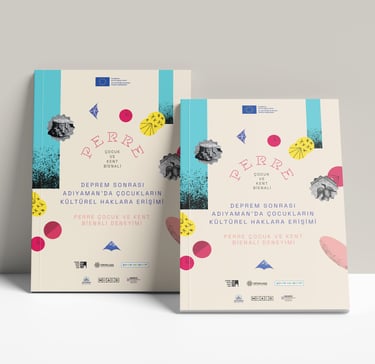
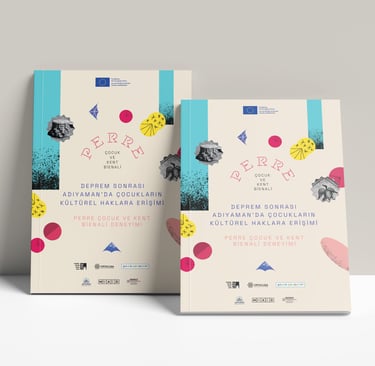
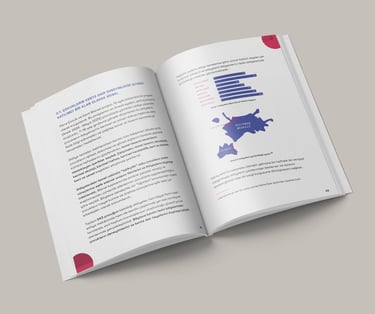
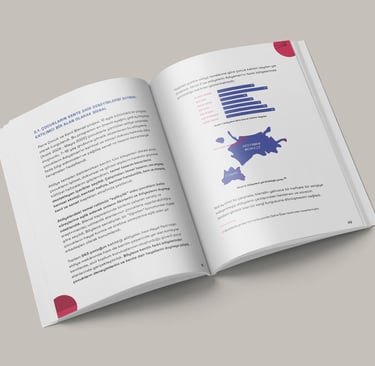
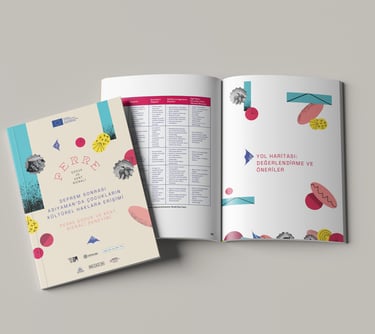
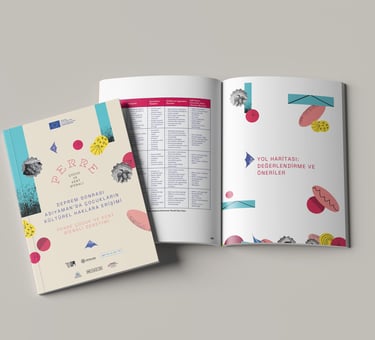
Drawing on the experience of the Perre Children and City Biennial, the report Children’s Access to Cultural Rights in Adıyaman After the Earthquake aims to make visible the practices and experiences that support children’s participation in cultural life and their access to cultural rights in post-disaster settings. The report brings together the approach developed throughout the Biennial, its implementation stages and key learnings, as well as city-themed art and design workshops with children, capacity-building sessions and workshops held with representatives of local government and civil society, stakeholder interviews, and findings from the Biennial exhibition.
As part of the project, which began in October 2024, workshops were held between December 2024 and May 2025 with the participation of 543 children. The Perre Children and City Biennial exhibition, held at the Adıyaman Commagene Cultural Centre from 13 to 20 June 2025, brought the children’s work into public view. Across the Biennial, including workshops and artistic production activities, a total of 904 children took part, while approximately 2,857 people participated in cultural events overall.
Structured around the themes of child participation, accessibility, inclusion, public spaces and play, memory and recovery, belonging, local capacity, child-centred data and participatory cultural policies, the report offers a framework for strengthening children’s cultural rights in post-disaster cities. Containing practical recommendations for cultural institutions, public bodies, civil society organisations and all stakeholders working with children, the report aims to contribute to rethinking cultural policies through a children’s rights perspective.
Click here to download the report Children’s Access to Cultural Rights in Adıyaman After the Earthquake.
Building Resilient Cities: A Guide for Child-Centred Post-Disaster Policies
Project Period: 2025-2026
Project Partner: UNICEF
In cities rebuilt after disasters, the way life is re-established reshapes not only the physical environment, but also social justice, children’s rights, environmental well-being and resilience. This process plays a decisive role in rebuilding social relationships, a sense of belonging and trust. Cities must therefore be reimagined through a child-rights-based approach, ensuring that children can live in healthy, safe, accessible and supportive environments. Our field experience in Adıyaman, one of the cities severely affected by the earthquakes of 6 February 2023, revealed a significant need to integrate children’s rights more effectively into post-disaster spatial planning and urban processes.
Prepared as part of the Civil Society Organisations Cooperation Programme under the ACAR Project, implemented by UNICEF with co-financing support from the European Union, Building Resilient Cities: A Guide for Child-Centred Post-Disaster Policies aims to contribute to the development of post-disaster urban policies that take children’s needs, rights and well-being into account.
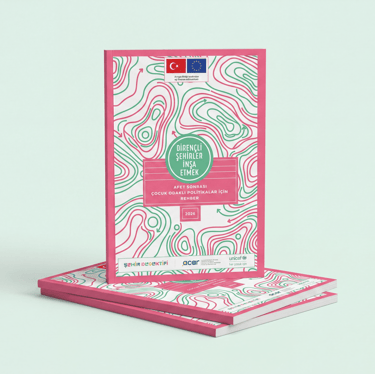
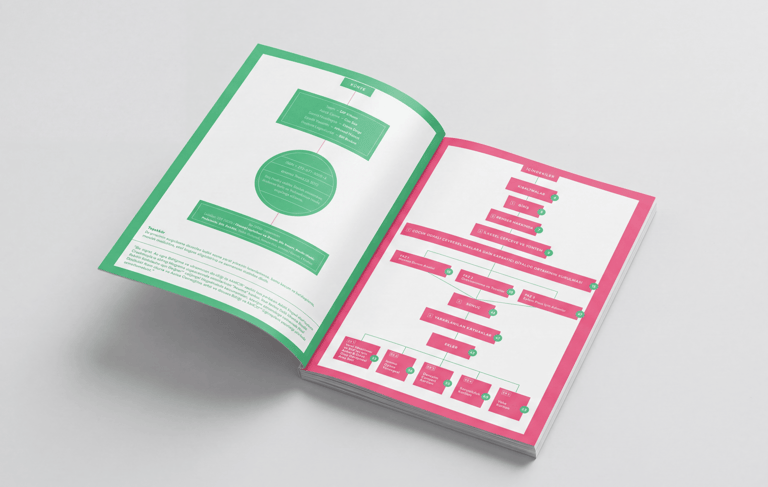
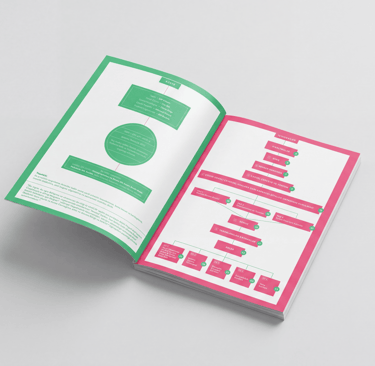
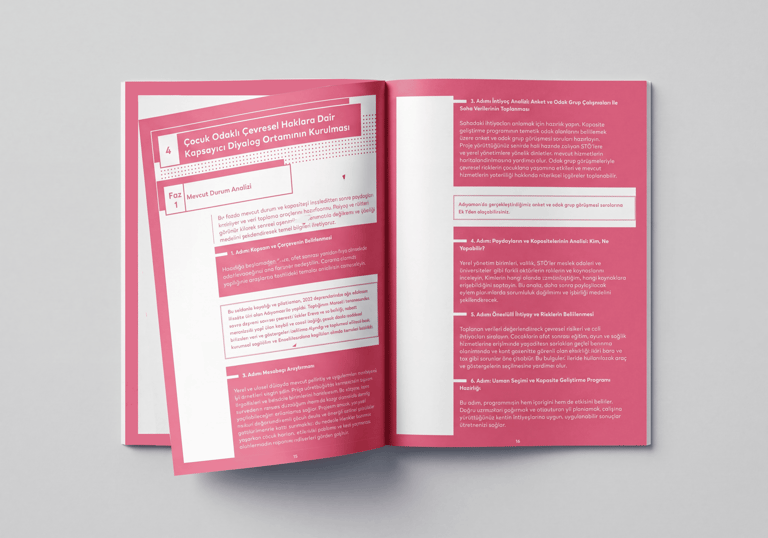
Designed for local authorities, public institutions and civil society organisations, the guide brings together the principles of children’s rights, environmental justice, gender equality, accessibility, participation, data and accountability. Its development was informed by a literature review, focus group discussions, field experience and a workshop held in Adıyaman with representatives of local authorities, public institutions and civil society organisations.
The guide is structured around three main stages: situation analysis, collaborative planning and design, and action plan development. It offers practical recommendations on data collection, prioritisation, the allocation of responsibilities among institutions, policy development, advocacy, and monitoring and evaluation. Tools developed as part of the study, including the experience circle, responsibility cards and case cards, provide practical methods for facilitating collective discussion of post-disaster environmental risks, setting priorities and translating them into feasible actions.
Click here to download Building Resilient Cities: A Guide for Child-Centred Post-Disaster Policies.
Toplu Ulaşımda Çocuk (Children in Public Transportation)
Project Period: 2019
Project Partner: UN Sivil Düşün
The public transportation system is one of the most crucial components of vibrant urban life, providing children access to fundamental rights and services such as education, health, and social life. However, in the current public transportation systems and designs, children's needs are not considered at any scale. As the City Detective Initiative, which develops rights-based data, policies, education, and design tools for urban problems on the path to creating child-friendly cities, we carried out the "Children in Public Transportation" project with the support of Etkiniz UN. This project aimed to monitor children's public transportation experiences based on children's rights and develop participatory solution proposals for child-centered public transportation planning based on the data obtained.
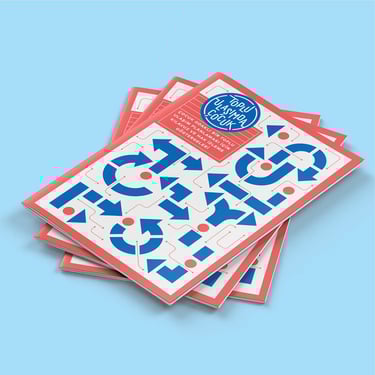
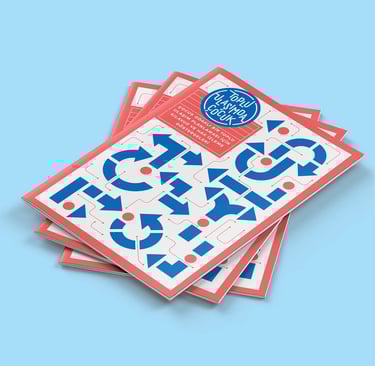
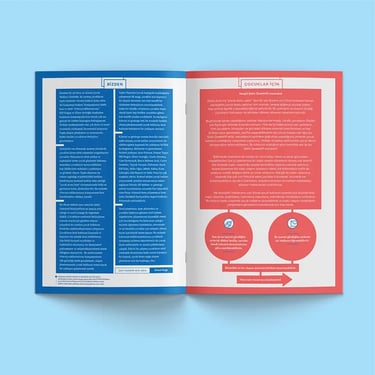
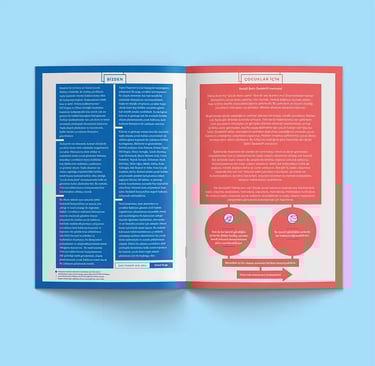
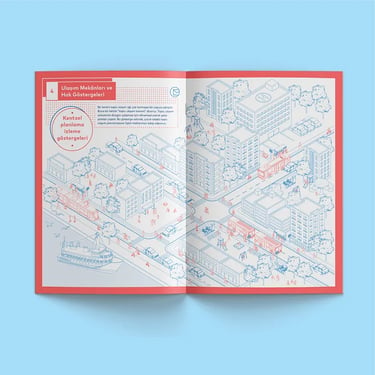
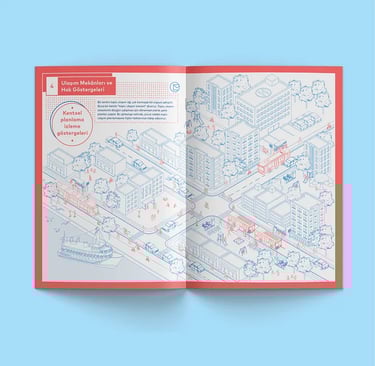
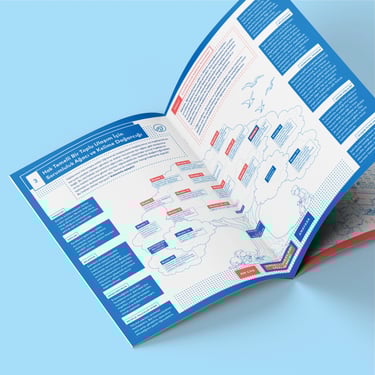
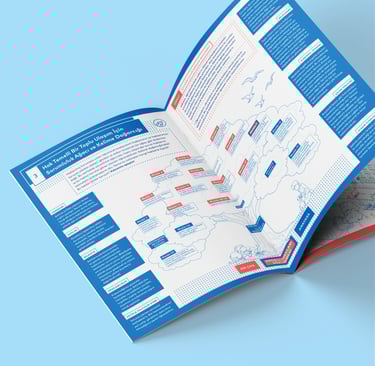
Graphic Design: Gökçe Genç & Erman Yılmaz, Informal Project Co. Illustrations: Gülzade Şentürk
The first phase of this work involved defining the needs for rights-based monitoring of an inclusive transportation system for children, in other words, asking rights-based questions that we can seek answers to together, especially with children. In 2020, as the City Detective Initiative, we held a workshop on Children in Public Transportation with 55 participants, including local government representatives, NGO representatives, and children. The workshop outputs, along with the experiences of the children who participated in the Urban Detective's workshop activities, are included in the report. The findings obtained were evaluated under the headings of exploratory transportation, safe transportation, accessible transportation, and ecological transportation.
Project Outputs:
Children in Public Transportation Report: This report provides an evaluation of children's public transportation experiences by analyzing the data collected during the project. It discusses the work done within the scope of public transportation in Istanbul, evaluates the 2019-2022 planning period, and highlights the needs that continue to affect children's participation in urban life, which are overlooked and not yet included in higher-scale policies and practices. These needs were discussed in this report based on interviews with civil society organizations and the outputs from children's workshops conducted within the scope of monitoring.
Guide and Rights Monitoring Indicators for Child-Centered Public Transportation Planning: This guide and set of indicators propose an approach that combines children's rights with urban rights in public transportation planning and decision-making processes.
It is prepared to serve as a resource for the work of local governments, urban activists, and civil society organizations that protect children's rights. It is also essential for this guide to be understandable for teacher communities, parents, and most importantly, children. Therefore, we tried to reinforce our recommendations with child-friendly narratives and games by opening certain sections of the guide to discussion with children.
Click to download the Children in Public Transportation Report.
Click to download the guide and rights monitoring indicators for child-centered public transportation planning.

Contact Us
Address:
Arap Camii Mahallesi Bankalar Caddesi No:19/9 Beyoğlu İstanbul
E-mail: sehirdedektifi1@gmail.com
Personal data storage and protection policy
Please click here to read our policy on the storage and protection of personal data in Turkish.